
Crossword puzzles at the kitchen table. A card game after dinner. A quick round of number puzzles before bed. These small habits add up, and for older adults, they can make a real difference in how the brain ages.
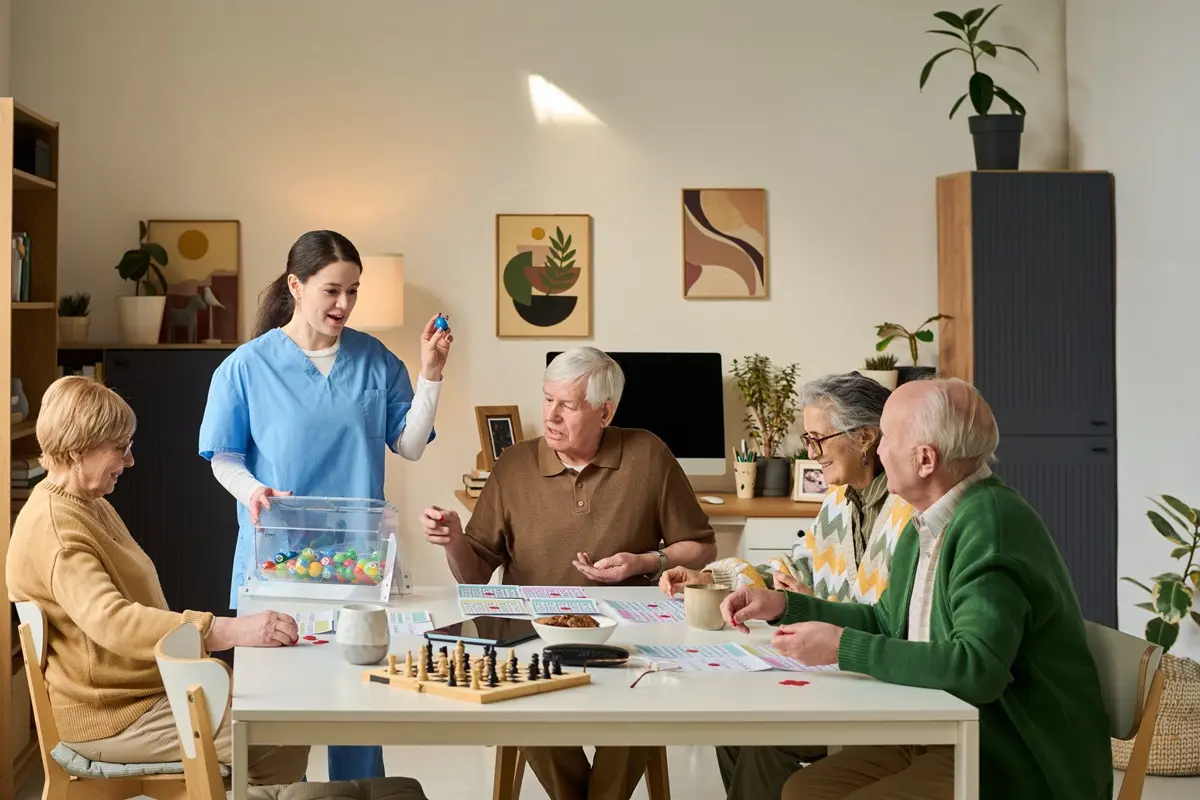
Research supports what many families already sense: keeping the mind active matters. A 2022 systematic review published in JMIR Serious Games found that cognitive games were more effective than passive interventions in improving nonverbal and working memory in older adults with cognitive impairment. When seniors play games that challenge recall, pattern recognition, and problem-solving, the brain gets a workout it can benefit from.
At Pegasus Landing of Santa Fe, the approach to memory care goes beyond checking boxes. Through individualized programming, team members work alongside residents to provide evidence-based engagement, including the kinds of activities that research continues to support.
Why Memory Games Support Cognitive Health
The brain responds to challenge. Activities that require concentration, recall, and reasoning put cognitive function to work in ways that everyday routines often do not.
A study from UCLA Health found that computerized brain-training games may improve executive function, processing speed, verbal memory, and working memory in adults over 60. Crossword puzzles have shown the potential to delay the onset of memory decline by as many as 2.5 years with regular use. Number puzzles, such as sudoku, may put cognitive performance on par with adults eight years younger when played more than once per day.
These findings do not point to a cure or reversal of disease. They point to one consistent idea: Brain health benefits from active, ongoing engagement, and that applies to seniors at every stage, including those navigating early memory loss.
Memory Enhancing Activities Families Can Try Together
For families looking to support a loved one’s cognitive health between visits, these memory activities for seniors are practical starting points.
Word Games and Crossword Puzzles
Whether in a newspaper or on a tablet, word-based puzzles put verbal memory and vocabulary to work. Research suggests doing them even once a month can bolster focus and attention, and the benefits increase with frequency.
Card Games and Board Games
Games like rummy, cribbage, or dominoes require short-term memory, tracking, and strategic thinking. They also offer the added benefit of social interaction, which is a factor in cognitive well-being.
Number Puzzles
Sudoku and comparable number-based games ask the brain to track patterns and solve problems without relying on verbal memory. A large study of nearly 20,000 adults age 50 and older found a direct link between number puzzle frequency and cognitive function.
Photo Memory Games
Looking through family albums and naming people, places, and years draws on long-term memory in an accessible, low-pressure way. Pairing photos with short stories or questions adds another layer of engagement.
Sorting and Pattern Activities
Organizing items by color, shape, or category can serve as an accessible form of memory activity for seniors who may find traditional puzzles difficult. Repetition builds familiarity, and familiarity supports confidence.
Digital Brain Training Programs
Apps and websites designed for brain health, including the AARP brain health platform, offer games across a range of cognitive tasks: recall, pattern recognition, sequencing, and more. These are low-barrier options that can be used at any time.
Memory Care Activities at Pegasus Landing of Santa Fe
For seniors living with dementia or Alzheimer’s, individualized and evidence-based programming matters more than general brain teasers. Pegasus Landing of Santa Fe offers assisted living and memory care in Santa Fe, NM, a city rich in cultural heritage. The art along Canyon Road, the rhythms of the Santa Fe Plaza, the long views of the Sangre de Cristo Mountains: These become part of the stories residents carry with them, and team members are trained to build on that history.
Through the Connections memory care program, Pegasus Senior Living’s signature approach to dementia-supportive care, programming is built around three guiding principles: Connect, Move, and Learn. Rather than a one-size routine, the program draws on individualized engagement to support neuroplasticity and respond to each resident’s strengths, interests, and history.
Memory care activities within this framework are therapeutic, not recreational for recreation’s sake. Whether a resident finds more engagement through music, tactile tasks, visual puzzles, or group activities, the team works to meet them where they are.
The Connections program is evidence-based, which means its methods are grounded in research about how the brain responds to cognitive and physical activity over time.
Senior Memory Games and the Role of Physical Activity
Cognitive health and physical health are not separate topics. Multiple studies have found that physical activity and cognitive training, when combined, may produce stronger results than either approach alone.
Memory games for older adults can be paired with movement, whether chair yoga, a short walk, or a light stretch routine, to reinforce the link between body and mind. In communities like Pegasus Landing of Santa Fe, programming takes this relationship seriously, weaving physical and cognitive activity together.