
A 2026 longitudinal study found that frequent gardening was linked with a 22% lower mortality risk, along with longer telomeres, the protective caps at the ends of chromosomes that naturally shorten with age. Shorter telomeres are tied to faster cellular aging, so an activity connected to longer ones is worth paying attention to.
The benefits of gardening for seniors go beyond a tidy yard, and Healthy Aging Month is a fitting time to explore why.
September marks September Is Healthy Aging Month, now in its 34th year, and this year’s theme is “Curiosity Has No Age Limit.” The observance encourages adults to keep learning, trying new things, and staying engaged at every stage of life, whether that means picking up an instrument, exploring a new subject, or, fittingly, learning a new plant or gardening technique for the first time.
Gardening and Stress Relief
Gardening’s benefits show up most clearly in daily mood and stress management.
Among adults 55 and older, 61.6% report gardening at least sometimes, and more frequent gardening measurably buffered the negative relationship between stress and mental health. In other words, gardening did not just improve mood in the moment. It appeared to protect against the effects of ongoing stress actively.
That protective effect makes gardening for healthy aging worth considering alongside more traditional stress management tools, especially for anyone looking for something hands-on rather than another appointment on the calendar.
Gardening and Cognitive Health
Frequent garden work has also been associated with a reduced risk of developing dementia, and research from the same 2026 report points to an overall positive effect of gardening on depression and anxiety outcomes as well. The exact mechanism likely involves a mix of physical activity, sensory engagement, and the light problem-solving gardening requires, from spacing plants to timing a harvest.
Cognitive benefits like these are part of why senior gardening activities show up so often in wellness programming, not just as a pastime but as something with real, measurable effects.
Gardening as Movement
Horticultural therapy and everyday gardening activities produce measurable improvements across mental, physical, and general health domains, particularly for adults managing chronic conditions.
Gardening rarely feels like formal exercise, but it moves the body in ways that add up.
A few common gardening tasks double as gentle movement:
- Watering and light weeding, which build in regular standing and reaching
- Potting and repotting plants, which works hand strength and dexterity
- Harvesting vegetables or flowers, which encourages bending and stretching
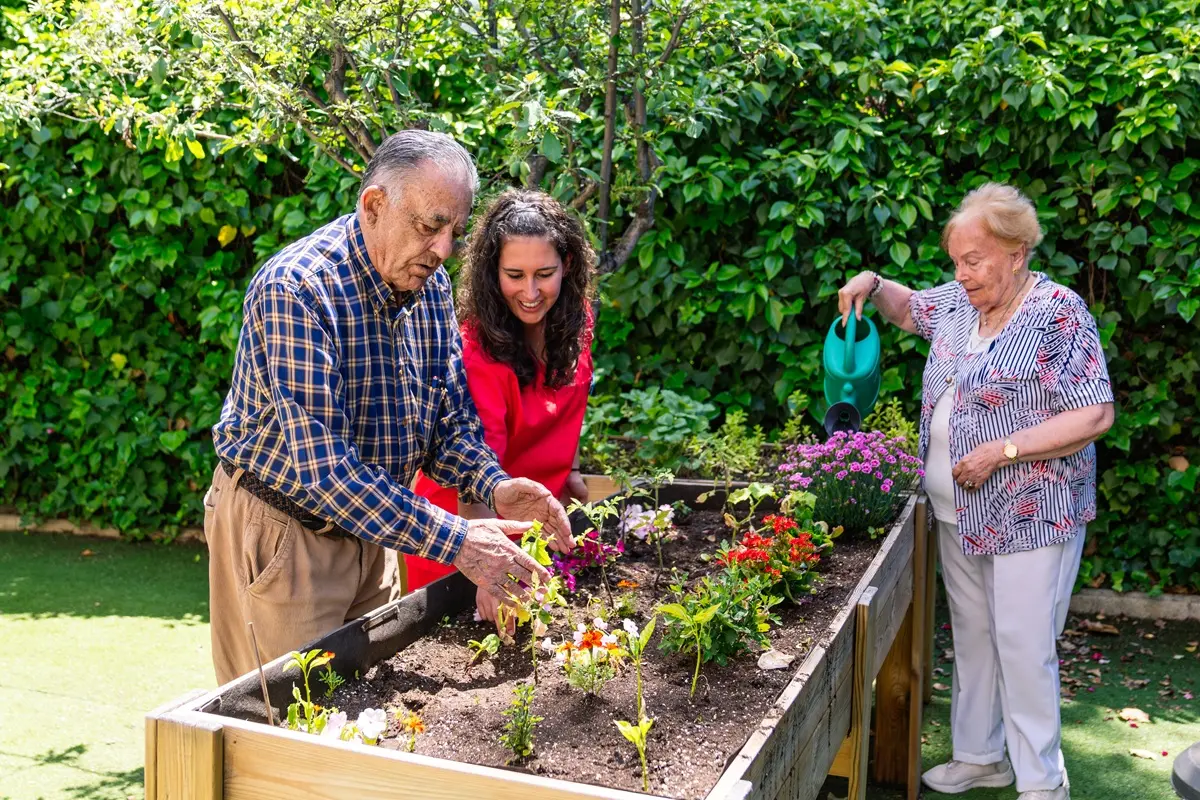
- Raised bed gardening, which reduces the need to kneel or crouch
None of these tasks require heavy lifting or long stretches of standing, which makes gardening approachable even for those who find traditional exercise intimidating.
Getting Started With Healthy Aging Activities
Starting a gardening habit does not require much beyond a small space and some patience. Healthy aging activities like gardening work best when you start small and build from there.
A few ways to ease into it:
- Starting with a single raised bed or a few containers rather than a full yard
- Choosing lightweight, ergonomic tools designed for smaller grips
- Joining a gardening group or club for company and shared knowledge
- Picking low-maintenance plants suited to the local climate
Gardening also pairs well with other healthy hobbies for seniors that round out a full week without overloading any single day.
A few activities for seniors that complement gardening well:
- Short walking groups for light cardio and fresh air
- Chair yoga or gentle stretching sessions
- Art classes for a different kind of hands-on creativity
- Book clubs or discussion groups for social time indoors
Mixing gardening with a few of these keeps the week varied without adding pressure to any single day.
Planting the Habit at The Gardens at Marysville
Our courtyard at The Gardens at Marysville reflects the Pacific Northwest itself, planted with native and regional greenery that residents help care for throughout the year. Raised garden beds make it easy for residents to plant, tend, and harvest without needing to kneel in the dirt.
A few of the ways residents get involved:
- Raised bed gardening for vegetables and seasonal plants
- Our garden club, which plans and selects plants for hanging baskets, vegetable beds, and flower boxes
- Painting rocks to add to the garden, giving everyone a small, personal touch on the space
- Seasonal planting projects that change with the calendar
Both our assisted living and memory care residents have a place in the garden, not just a view of it.
Assisted living residents can garden as independently or with as much support as they’d like. Our Connections memory care program builds gardening into its Connect, Move, Learn framework, giving residents with cognitive changes a hands-on way to stay curious and engaged without needing to remember every step.
Healthy aging looks different depending on where someone is in their care journey, and our garden is built to meet residents wherever that is.