
Picture the table before the guests arrive, with the good dishes out, the rolls rising, and the house smelling like home. Then picture a parent who has always been the heart of the day, now unsure of the noise, the faces, and the schedule.
Most Mississippi families want a good day for everyone at the table, from Southern comfort food to college football rivalries.
Navigating the holidays with a parent with dementia can feel like a lot, and according to the Alzheimer’s Society, 65% of family caregivers say Alzheimer’s or another form of dementia has completely changed how they feel about enjoying the holidays.
That feeling is common, and a few thoughtful adjustments can bring comfort back to the day.
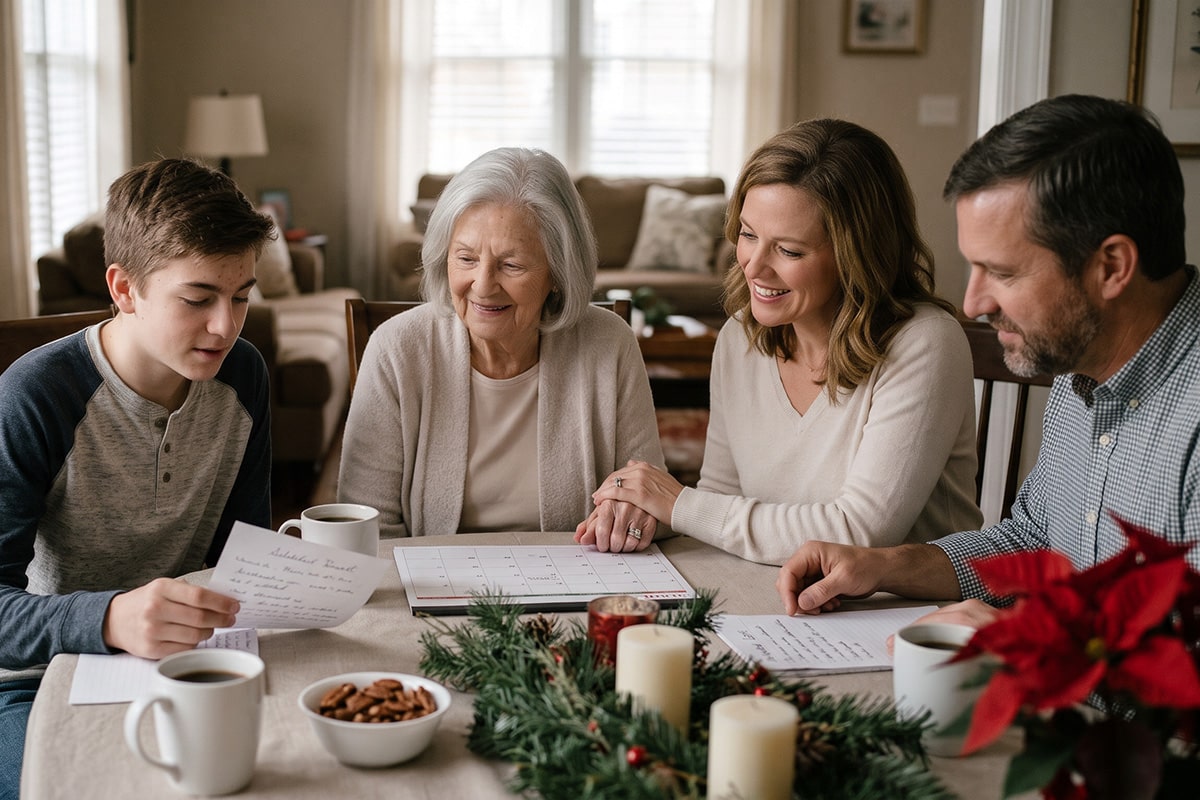
Why Thanksgiving Can Feel Hard
A busy holiday asks the brain to do a lot at once, with many voices, new smells, a changed schedule, and relatives who may not have visited in a while.
For a parent with memory loss, that can be tiring or confusing, and it can bring on worry or restlessness. Caregivers feel it too, since they are hosting, watching, and hoping everything goes well.
The holiday can still be wonderful when you shape the day around a parent’s comfort.
Plan the Day Around Sundowning
Many people with dementia feel more confused or restless late in the day, a pattern called sundowning, and a full house can make it stronger. Familiar routines help the day feel steady, and dementia holiday tips for families often start with timing.
A few choices go a long way:
- Serve the main meal around midday instead of evening
- Schedule a rest before guests arrive
- Keep usual mealtimes, medication times, and bedtime routines
- Plan a clear start and end for the gathering
- Agree on an exit plan in case a parent needs a break
An earlier meal and a steady routine give a parent the best chance to enjoy the day.
Prepare Guests and Share the Load
Telling guests what to expect ahead of time sets a kind tone. Some relatives may not realize that a parent repeats stories, needs extra time, or may not recognize a familiar face, and that these changes come from dementia and not from the person.
Photos, stories, or a quick video call beforehand can help a parent feel at ease, making a dementia-friendly Thanksgiving much easier to plan.
A short note to guests can help:
- Smile, say hello, and share who is visiting
- Be patient with repeated stories and questions
- Avoid correcting, and give time to finish a thought
- Call before arriving so the household can prepare
Dividing hosting duties helps too. One person can greet and chat with a parent, another can watch for fatigue, and another can run the kitchen, so a parent is never left out and a caregiver is never carrying everything alone.
Thanksgiving tips for dementia caregivers often come down to asking for help early.
A Calm Table and Small Roles
Seating makes a difference. A spot beside a trusted person, away from kitchen traffic and the loudest conversations, with good lighting and a clear view, keeps the day gentler.
A quiet room with a favorite blanket or sweater gives a parent somewhere to rest, and smaller portions of familiar dishes are easier to enjoy than a full feast.
Small roles help a parent feel part of the day. Matching a task to what a parent can still do builds confidence, and it is a good time to adapt a tradition instead of dropping it, such as asking a longtime carver to pass the rolls.
A few ideas:
- Folding napkins
- Setting out silverware or place cards
- Stirring cranberry sauce
- Arranging fall leaves in a centerpiece
- Writing something to be thankful for on a paper leaf
Each task offers a role, a purpose, and a reason to smile.
How to Communicate With Someone With Dementia at the Table
A person-centered approach starts with listening, eye contact, and attention to tone and body language. Validation means responding to the feeling behind a statement instead of correcting the facts, which lowers distress and protects dignity.
Reminiscing, music, and familiar smells can also open a conversation when words are harder to find.
A few approaches help:
- Speak calmly, in short sentences, and wait for a response
- Acknowledge feelings before offering information
- Ask about a favorite Thanksgiving or a family recipe
- Play familiar songs or look at old photos together
Activities for seniors with dementia work best when they match a parent’s abilities, and a new game can add fun. Trivia about favorite songs or movies, a matching game, a sing-along, or an easy game with a grandchild all create shared laughter without pressure.
Caregivers Deserve a Seat at the Table Too
Dementia caregiving tips often focus on the loved one, yet the host needs care as well. Set realistic expectations, let someone else take over a favorite dish, and choose a smaller gathering. Taking a few quiet minutes during the day helps too.
Thanksgiving at Ridgeland Place
At Ridgeland Place in Ridgeland, MS, we offer assisted living and memory care, and we host a Thanksgiving meal for residents and families every year.
Choosing a community often means finding the right balance of comfortable living and the right level of care, and we are glad families find it here. Residents enjoy making new friends, joining daily activities, and enjoying life, and our team members are always ready to help or answer questions with a smile and real kindness.
A few basics about life here:
- Chef-prepared, seasonal meals in a restaurant-style dining room
- Assisted living support with daily activities, medication management, wellness assessments, and on-site rehabilitation
- A clean, attractive community with a library, an on-site salon, a fitness center, and paved walking paths
- Daily social activities, from bingo to happy hour
- Dementia-friendly apartments
Our memory care team approaches the holidays the same way it approaches every day: with familiar routines, a calm, secure setting, and programming that meets each resident where they are. The Connections memory care program follows the Connect, Move, and Learn sequence created by Dr. Sandra Petersen, so residents with dementia can enjoy time with family in a way that feels comfortable.