
When families begin looking for support, the first question is often simple: Who will be caring for my loved one? For many families, that question starts small. A missed medication. A change in routine. A moment that feels slightly off, but hard to explain.
Titles and qualifications feel like the most important factor. But over time, many families realize that the quality of care depends on more than the person providing it. It depends on how that care is coordinated, supported, and sustained day-to-day.
Understanding the different types of caregivers is a helpful starting point. At Pegasus Senior Living, we see firsthand how those roles come together to support residents and families each day. Understanding how caregivers work together, not just individually, is what truly shapes outcomes.
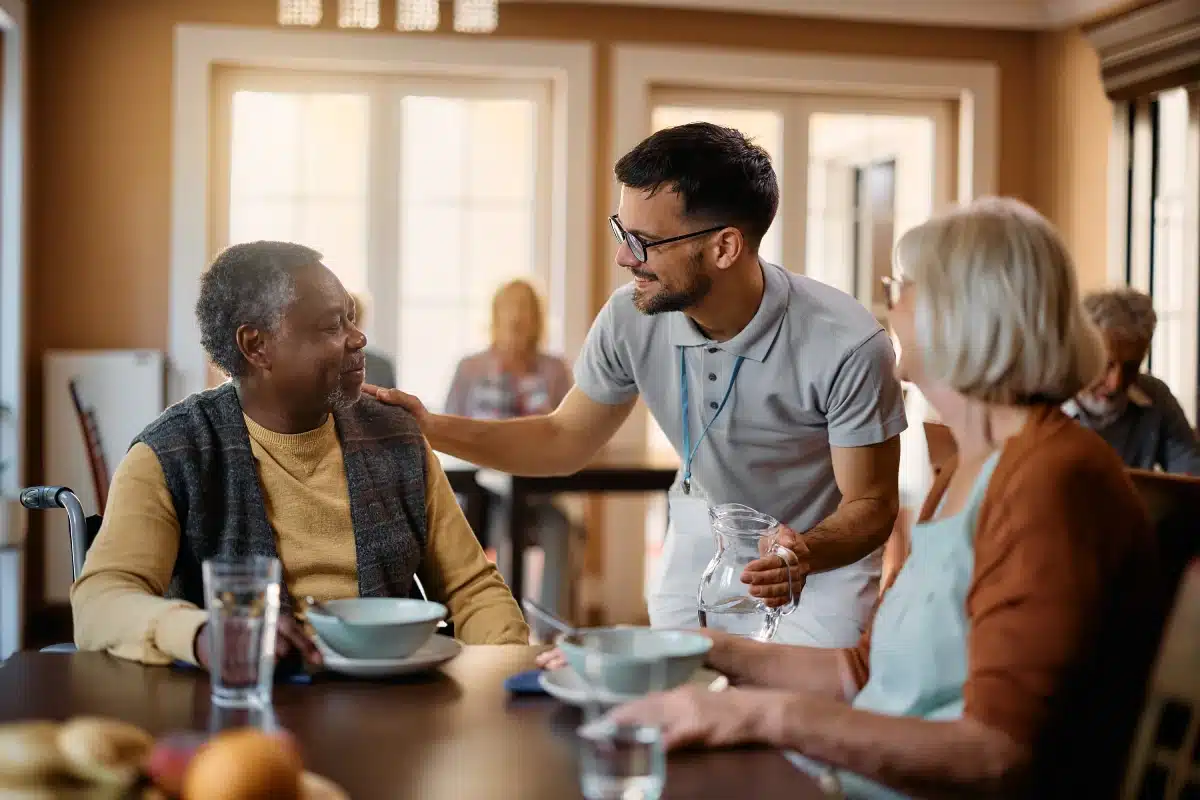
Understanding the Different Types of Caregivers
The four main types of caregivers include family caregivers, professional caregivers, home health aides, and licensed nurses. Each plays a distinct role in supporting older adults.
Family Caregivers
Family members are often the first to step in. They provide emotional support, help with daily routines, and coordinate appointments. While this role is deeply personal, it can also become overwhelming without additional support.
Professional Caregivers
Professional caregivers assist with nonmedical needs such as bathing, dressing, meal preparation, and companionship. They bring consistency and experience, but care is typically limited to scheduled hours.
Home Health Aides
Home health aides support both daily living and basic health-related tasks. They may assist with mobility, monitor conditions, and help reinforce care plans under supervision.
Licensed Nurses
Licensed nurses provide clinical oversight, including medication management, health assessments, and coordination with physicians. Their expertise is essential, but they are not always present continuously in a home setting.
What Do Caregivers Do?
Caregiving responsibilities often extend beyond what families initially expect. According to the National Institute on Aging, caregivers may assist with:
- Personal care, such as bathing and dressing
- Household tasks, including cleaning and shopping
- Meal preparation and nutrition monitoring
- Transportation to appointments
- Medication tracking and coordination of care
- Administrative or financial support
This range of responsibilities is why caregiving can quickly become complex. It is rarely just one role. It is a combination of responsibilities that evolve over time.
Why Caregiver Type Is Only Part of the Decision
Families often ask what types of caregivers are best. While qualifications and experience matter, the more important factor is how care is managed each day.
Without coordination, even highly qualified caregivers may work in isolation. Gaps in communication, scheduling, and oversight can lead to inconsistent support, especially as needs change.
Care becomes more effective when it is structured, consistent, and supported by a system rather than relying on a single individual. This is where many families begin to shift their thinking, from choosing a caregiver to understanding how care actually works day-to-day.
The Emotional Balance Families Navigate
Care decisions are not only practical. They are deeply personal.
Families often feel a tension between wanting to stay involved and wanting reliable professional support. It is common to delay seeking help until more noticeable challenges arise, such as changes in hygiene, mobility, or daily routines.
When families do reach out, they deserve a team that meets them with both expertise and genuine compassion — not just a checklist of services.
However, finding support earlier often creates more stability and reduces stress for everyone involved.
How Senior Living Supports Coordinated Care
Senior living communities approach caregiving differently. Instead of relying on separate providers, care is coordinated within a structured environment.
This includes:
- A team-based approach to caregiving
- Ongoing communication between care providers
- Consistent daily routines and oversight
- Support that adjusts as needs evolve
Residents still build meaningful relationships with caregivers, but those relationships are supported by consistency and continuity. This level of coordination is built into daily life, allowing families to step out of the role of managing care and focus more on connection.