
Everyday movements like climbing stairs or reaching for a cabinet may seem routine, but as we age, these actions can become more challenging. Mobility, balance, and strength naturally decline over time — unless we stay active.
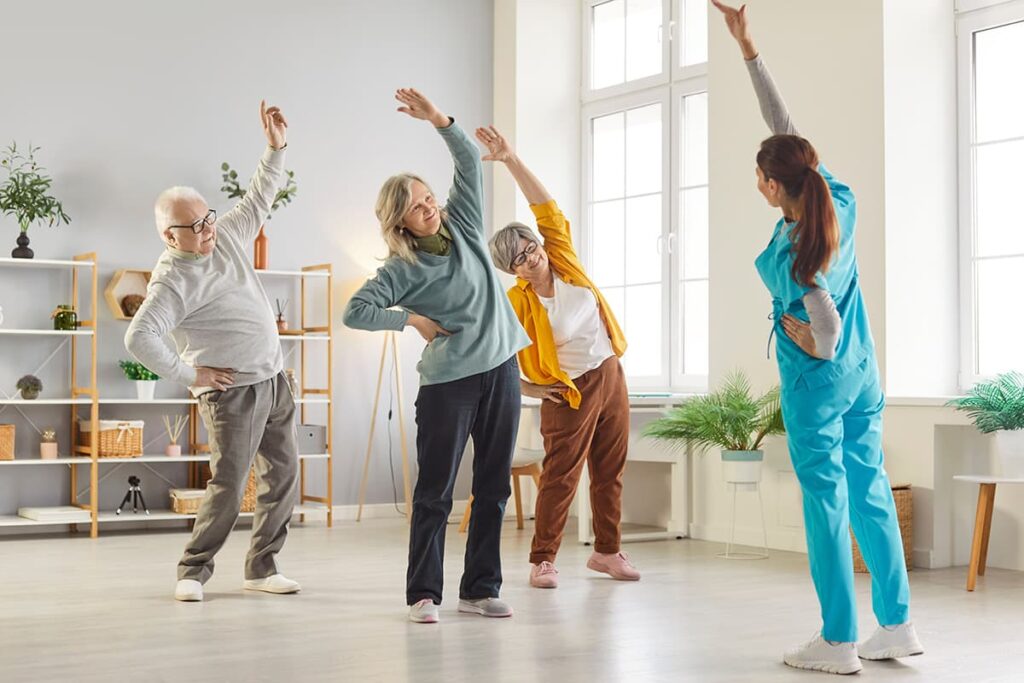
According to the Centers for Disease Control and Prevention (CDC), one in four adults over age 65 experiences a fall each year, and many lead to hospitalization. The good news is that consistent, gentle exercise can make a major difference in confidence, coordination, and independence.
Movement doesn’t just strengthen muscles; it also benefits the brain. Research shows regular exercise helps slow memory loss, reduce anxiety, and improve mood. Staying active gives older adults more energy for daily life, keeps joints flexible, and lowers the risk of chronic health issues.
If you or a loved one wants to stay strong and steady, this guide explains the best exercises for seniors to maintain balance and prevent falls. Dr. Sandra Petersen, Pegasus Senior Living’s Senior VP of Health and Wellness, offers expert advice on how to move and build strength at any age.
At Evergreen Place, fitness is part of daily life. We offer guided programs and on-site therapy support to help residents enjoy movement, balance, and overall well-being.
Why Fitness for Seniors Matters
Before diving into the best balance exercises for seniors, it helps to understand why physical activity is so important for aging well. When muscles weaken or balance declines, even a small stumble can cause injury. But movement is about more than fall prevention — it’s a key to independence and vitality.
Here’s how staying active supports older adults:
- Improves Mobility: Gentle movement exercises for seniors keep joints flexible and muscles strong.
- Enhances Posture and Stability: Balance and posture exercises for seniors improve coordination and confidence.
- Supports Brain Health: Physical activity increases blood flow to the brain, which may slow cognitive decline.
- Boosts Emotional Wellness: Group fitness activities for seniors promote motivation and social connection.
- Encourages Independence: With better strength and mobility, older adults can stay self-sufficient longer.
Even short sessions, such as chair exercises for seniors or walking programs, make a difference. Staying active several times a week is one of the best long-term investments in overall health.
Best Balance and Strength Exercises for Seniors
Dr. Petersen recommends simple, low-impact movements that strengthen muscles, improve coordination, and reduce fall risk. Many can be performed at home using a sturdy chair or countertop for support.*
*Always consult your primary care doctor before beginning any new exercises or fitness routines.
1. Sit-and-Stand Exercise for Leg Strength
One of the best leg exercises for seniors, this movement helps strengthen thighs, hips, and core muscles — essential for daily activities.
How to do it:
- Sit in a sturdy chair with both feet flat on the floor.
- Use your legs to slowly rise to a standing position.
- Lower yourself gently back into the chair.
- Repeat 8–10 times.
Tip: Start with arm support if needed, then gradually reduce it to build independence.
2. March in Place for Mobility and Endurance
Marching in place is one of the simplest mobility exercises for older adults. It strengthens the legs and promotes coordination.
How to do it:
- Stand behind a chair for balance.
- Lift your knees one at a time in a marching rhythm.
- Continue for 20–30 seconds per round.
This can also be performed as a seated exercise for limited mobility for those who prefer chair support.
3. Side Leg Raise for Hip Stability
Among the hip mobility exercises for older adults, this one builds strength and balance.
How to do it:
- Stand tall while holding a chair.
- Lift one leg slowly to the side, keeping toes pointed forward.
- Lower gently and repeat 10 times on each side.
Tip: Focus on control — avoid swinging your leg or leaning.
4. Standing Kickback for Core and Glute Strength
Kickbacks target the lower back and glute muscles, improving stability and posture.
How to do it:
- Hold onto a chair or counter.
- Extend one leg behind you without arching your back.
- Return to start and switch legs.
This move forms part of a strength-building workout routine that supports posture and balance.
5. Heel Raises for Balance and Stability
Strong ankles improve walking confidence. Heel raises are among the balance exercises for fall prevention for seniors.
How to do it:
- Stand tall while holding a chair.
- Lift your heels slowly, then lower back down.
- Repeat 10–15 times.
Add this to your daily fitness exercises for seniors routine for steady improvement.
6. Seated Exercises for Strength and Flexibility
Seated exercises for seniors are excellent for those who prefer low-impact activity. These can strengthen the arms, core, and legs while reducing strain.
Try these easy movements:
- March your legs in a seated position.
- Raise arms overhead and lower slowly.
- Twist gently from side to side to stretch the spine.
These sitting exercises for seniors can be done at home or in group fitness programs.
What Exercises Should Seniors Avoid?
While most seniors can perform many workouts, some routines may be too intense or risky without supervision. Older adults should take extra care when trying high-impact activities.
Avoid or modify exercises that include:
- Heavy lifting without proper guidance
- Fast or jerky movements that strain joints
- Deep squats or sit-ups that stress the lower back
- Balancing on unstable surfaces without support
Remember, seniors are capable of great progress — the goal is to strengthen, not strain. Begin gradually and adjust based on your comfort level.
Daily Fitness Support Near You
At Evergreen Place, we believe movement should be enjoyable and accessible. That’s why we offer structured senior workout routines and group fitness sessions led by trained professionals. Residents can also access on-site physical therapy and wellness programs to build balance, strength, and endurance.
Many older adults benefit from easy leg exercises for seniors and low-impact stretching. Our programs include these exercises daily to help maintain mobility and confidence. Each person receives guidance tailored to their fitness level, ensuring a routine that feels achievable and rewarding.